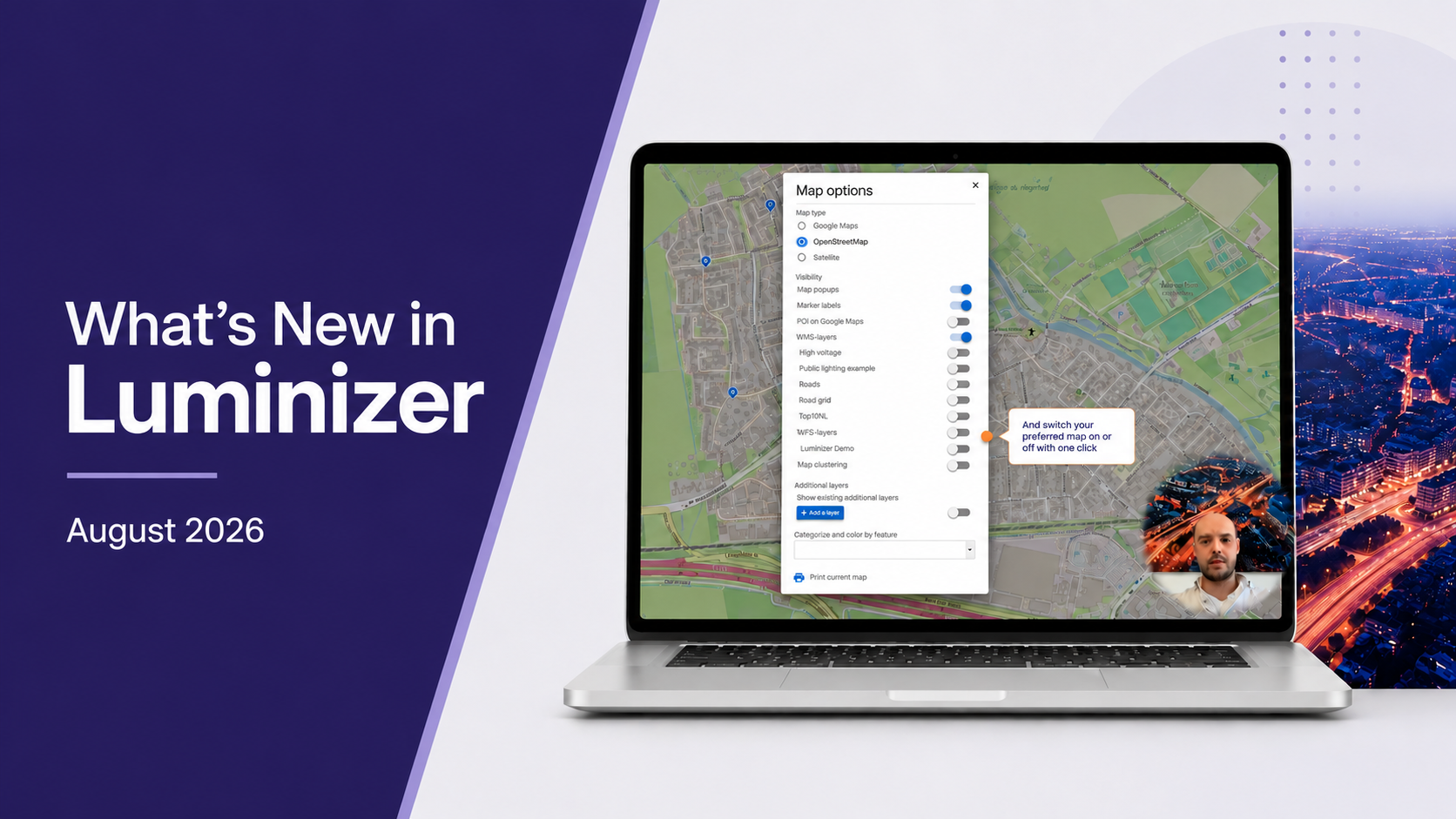
Luminizer continues to evolve. In this edition, we share the latest developments, including support for traffic signal systems and EV charging stations, WFS map layers, TALQ 2.7.1 certification, and new capabilities for multi-year maintenance planning.
We also look ahead to the new Notification Center, which will automatically deliver relevant notifications to the right users.

Release notes
Expanded support for additional electrical asset types, including work order management
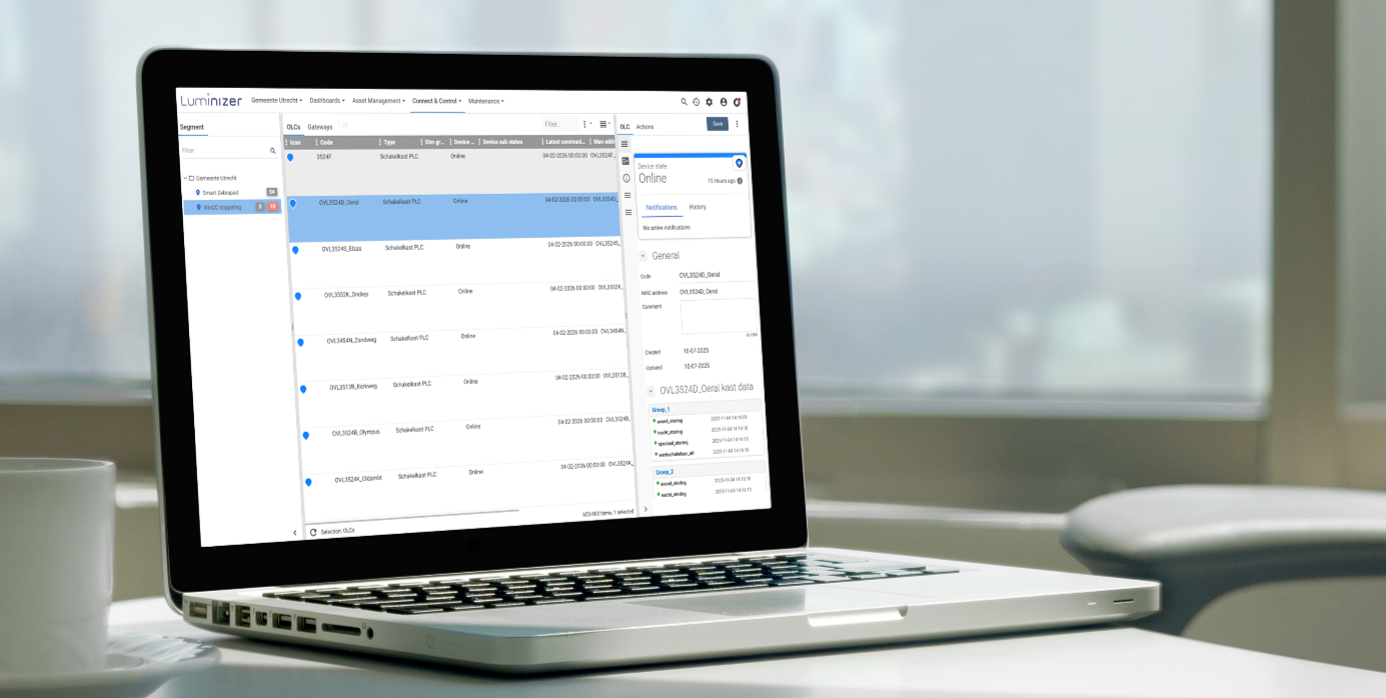
Luminizer now supports traffic signal systems and EV charging stations. These asset types have dedicated forms within Asset Management and support specific fault types and work orders.
This expansion is made possible by improvements to Luminizer’s core architecture, making it easier to support additional asset types. Luminext remains focused on the needs of public lighting managers, but we increasingly see these professionals taking responsibility for more than public lighting alone.
Would you like to manage traffic signal systems or EV charging stations in Luminizer? Or do you need support for other electrical assets? Get in touch with us.
WFS map layers
Luminizer has long supported adding and displaying WMS map layers on the Luminizer map, for example to show soil contamination, cadastral information, or other relevant geographical data.
WMS map layers are useful and valuable, but essentially consist of images and do not contain additional object information.
With the new support for WFS (Web Feature Service) map layers, additional object information can now be included. In addition to displaying objects on the map, additional data can be added and viewed directly in Luminizer via a pop-up.
For example, cables and pipelines in underground networks can be displayed together with information such as the cable type and installation date.
The possibilities are extensive. Do you have a map layer that you would like to add to your Luminizer environment? Let us know. We’ll be happy to help.
World first: TALQ 2.7 certification
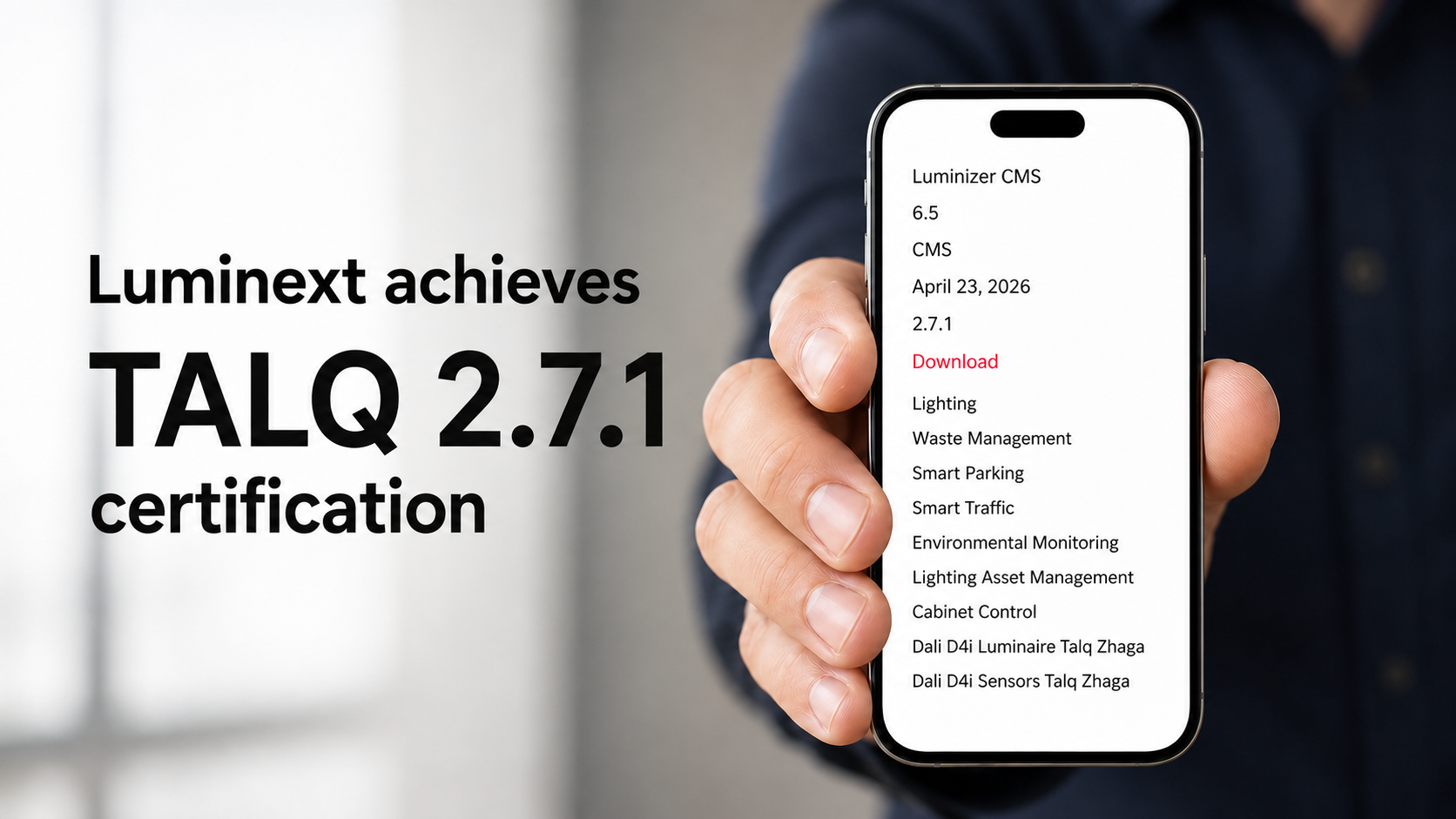
Luminext has reached another major milestone in smart public lighting. The Luminizer Central Management System (CMS) has been successfully certified to the latest TALQ 2.7.1 standard. This makes Luminizer the world’s first certified solution to support the new DALI D4i TALQ Zhaga profiles within the TALQ Protocol.
With this certification, Luminext once again demonstrates its pioneering role in developing open, interoperable, and future-proof smart city solutions. Read the full news article.
Uploading files to master data
To further improve file management in Luminizer, we’ve made a small but important improvement: files can now be added to all asset types in Master Data. This allows you to centrally store and easily access relevant documentation for poles, luminaires, lamps, OLCs, drivers, and more.
Multi-year maintenance planning for OLCs
Last quarter, we introduced multi-year maintenance planning functionality in Luminizer for poles, luminaires, and feeder pillars. OLCs can now also be included in multi-year maintenance planning.
This allows managers to define the expected lifespan of OLCs and plan future replacements.

Roadmap
Notification Center in Luminizer
A lot happens in the day-to-day management of public lighting. New faults are reported, work orders change status, colleagues leave comments, and projects are updated. Much of this information is already available in Luminizer, but users often still have to actively look for it.
That is why we are currently developing the Notification Center. It will actively bring relevant events to the attention of the right users, instead of requiring them to look up this information themselves.
In the first phase, we are focusing on email notifications. Users will be able to choose which notifications they want to receive. Later, we plan to make these notifications visible within Luminizer as well, making the platform a central place for current notifications and follow-up actions.
The content will be tailored to the user’s role. Contractors and field technicians will primarily receive notifications related to the execution of work. Public lighting managers at municipalities and provinces, for example, will receive information about new faults, incidents, users, and reports. We are also exploring the possibility of automatically sending certain notifications to an alternative email address.
Over time, we plan to expand the Notification Center with daily or monthly summaries and management reports. This will help users identify trends faster, plan work more effectively, and support discussions with up-to-date information.
With the Notification Center, we are taking another step towards a more proactive Luminizer. Not by giving users more information, but by ensuring that the right information automatically reaches the right person at the right time.